
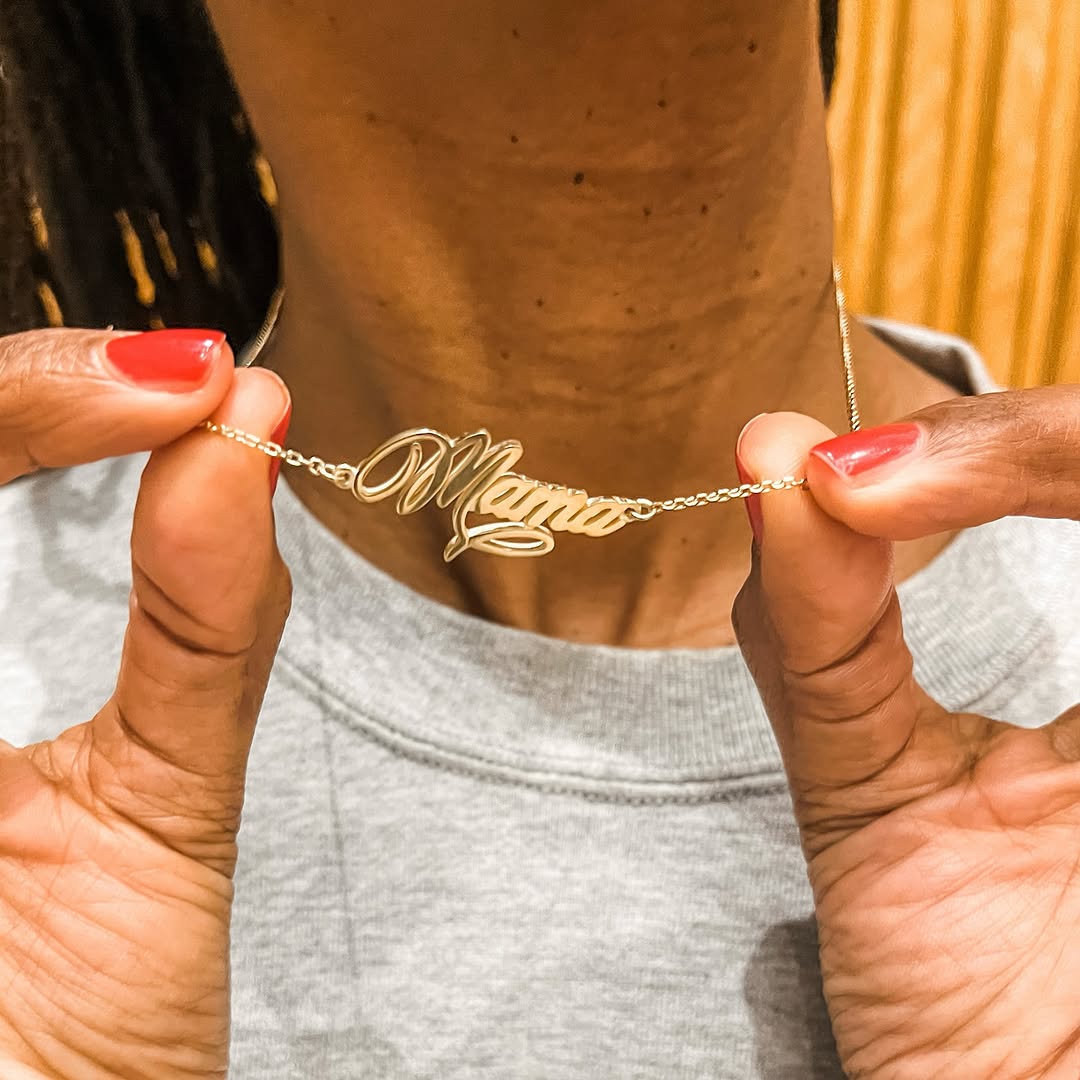

On the quiet radicalism of wearing your best jewelry on an ordinary day
There is a particular drawer in most homes. It might be a lacquered box on the dresser, a velvet pouch tucked behind the sweaters, a small safe with a combination someone has to think hard to remember. Inside it: the good pieces. The ones that came with a story. The ones that were expensive, or inherited, or given at a moment that mattered.
They are almost never worn.
Not because they aren't loved — quite the opposite. They are loved so carefully that they have been placed slightly outside of life, waiting for an occasion grand enough to deserve them. A wedding. An anniversary dinner. A milestone birthday with a round number attached. And so the jewelry that means the most spends the overwhelming majority of its existence in the dark, and the woman who owns it spends the overwhelming majority of hers wearing something she likes less.
We'd like to make a case for the opposite approach. Call it the Tuesday Rule: the good jewelry belongs to the ordinary days, and the ordinary days are the point.
The Occasion Trap
Somewhere along the way, fine jewelry got filed under event. It's an understandable mistake — the industry has spent decades marketing itself through proposals and anniversaries, and there is real beauty in a piece that marks a moment. But the logic has an odd consequence when you follow it out. If jewelry is only for occasions, and occasions are by definition rare, then the better the piece, the less of your life it participates in.
Turn that over for a second. The bracelet you would save from a fire is the one you've worn fourteen times. The earrings you bought on a whim three years ago have been on your body for perhaps two thousand days. Which of those has actually been part of your life?
There's also something a little sad in the assumption underneath it — the idea that a Tuesday isn't important enough. That the morning walk, the coffee before emails, the meeting you were nervous about and handled well, the dinner with the friend you've had since you were twenty-three, the ordinary Wednesday you'd give anything to have back in thirty years — that none of these clear the bar. Most of a life is made of exactly these days. Saving your jewelry for the exceptional ones is, in a quiet way, a vote against the rest.
What Gold Actually Wants
There's a practical argument here too, and it's the one people find most surprising: fine jewelry is not fragile. It's the costume pieces that are.
Pure gold is soft — genuinely soft, easily bent with your hands. Which is precisely why almost nothing is made from it. Alloying gold with copper, silver, and zinc to 14 karat produces a metal several times harder than the pure version, engineered specifically to survive being lived in. It resists scratching, holds its shape, and doesn't tarnish, discolour, or turn your skin green, because there's no base metal underneath waiting to oxidise. A solid 14kt chain is not a delicate thing being protected. It's a durable thing being under-used.
Diamonds go further. At the very top of the mineral hardness scale, a diamond can only really be scratched by another diamond — which is the actual argument for wearing your studs to the grocery store rather than storing them for a gala. The Classic Diamond Studs were designed in a four-prong setting for exactly this reason: minimal metal, maximum light, nothing to snag. They are a daily earring that happens to be extraordinary, not an extraordinary earring being wasted on a daily.
The same is true of the Aurora Fluted Gold Ring. Its geometric, faceted surface isn't only an aesthetic choice — texture is far more forgiving over years of wear than a high polish, which shows every mark. It's a piece built with a long future assumed.
Fine jewelry, made properly, is the most wearable jewelry you own. The instinct to protect it is well-meant and almost entirely backwards.
The Only Honest Measure of Value
The most useful question to ask before any purchase isn't how much is it — it's how many days will this be on my body.
A pair of earrings at $79 worn six times comes out at about thirteen dollars a wear. The same money spent on something you reach for four mornings a week disappears into a rounding error within a year. Extend the timeline the way fine jewelry actually deserves to be measured — a decade, two, a lifetime, a daughter — and the arithmetic stops being arithmetic and becomes something closer to a philosophy.
This reframes the entry point entirely. The Mini Gold Huggies are among the least expensive things we make and, by the honest measure, quite possibly the best value in the collection: solid 14kt, light enough to forget you have on, designed to sleep in and swim in and never think about. The Round Gold Flat Studs belong to the same category — as simple as jewelry gets, and consequently never wrong.
It also reframes the top end. The Signature Classic Diamond Tennis Bracelet is a serious piece by any measure. But a tennis bracelet worn twice a year is an expensive ornament, while a tennis bracelet worn on Tuesdays — pushed up the wrist while you type, catching light across a lunch table, half-hidden under a shirt cuff — becomes something else entirely. It becomes a fact about you. That is what the piece was actually made for.
Building a Tuesday Uniform
The practical shape of this idea is a small set of pieces you put on without deciding anything. Not a rotation. A uniform — worn until it stops being jewelry and starts being part of how you look without them on being an option.
Start at the ears. This is the anchor, because it's the one thing you'll wear on the days you wear nothing else. A single pair of hoops, chosen once and worn forever, does more work than a drawer of options. The Small Gold Tube Hoops are the classic answer, with the Extra Small Gold Tube Hoops for anyone who prefers something closer to the lobe. If you want a little more, the Pave Small Diamond Hoops carry a row of diamonds across the front and still read as everyday — the light is what people notice, not the earring.
Then the neck, in layers. The most durable necklace habit is one foundation chain that lives on you and one pendant that changes with the chapter. The Delicate Cable Chain Necklace is the lightest version of that foundation; the Gold Omega Chain Necklace is the substantial one, sitting flat and smooth at the collarbone and built to hold a pendant with real presence.
For what hangs from it, the choice is really a choice about what you want to carry. The 14K Gold Mini Initial Necklace is a letter — yours, or someone's you love, or a small stack of both. The 0.3 Carat Natural Diamond Solitaire Necklace is the version with no message at all, a single stone floating on a fine chain, which some days is exactly right. And the Lila Oval Diamond Pendant is a full carat that can be moved from chain to chain as your collection grows around it.
At the wrist, choose one and commit. The Curb Chain Bracelet has weight to it — solid, unfussy, the kind of piece that looks better with a rolled sleeve than with an evening dress. The Gold Taylor Wave Bangle, named after Olivia's daughter, is our signature for a reason: the wave keeps it from ever reading as formal, so it can go from a school run to a dinner without being reconsidered. If you'd like the same silhouette in an easier entry point, the Sterling Silver Taylor Wave Bangle is the same design in silver.
Finish at the hands. Rings are where a uniform is allowed some personality, largely because stacking is forgiving — you can add one piece a year for a decade and end up with something that looks intentional rather than accumulated. The Thin Twisted Rope Stacker Ring is the workhorse: narrow enough to sit beside anything, textured enough to hold its own alone. The Flexible Cuban Curb Chain Ring does the opposite job, moving with your finger and adding a bit of edge to an otherwise quiet hand.
That's the whole system. Four decisions, made once, worn for years.
The Pieces That Ask for a Little Care
Honesty matters more than enthusiasm here, so: not everything belongs on every Tuesday, and a brand that tells you otherwise isn't being straight with you.
The Herringbone Chain Bracelet is a case in point. The flat, liquid drape that makes herringbone so beautiful comes from the way each link sits against the next — and that same construction means a sharp bend or a hard catch can leave a permanent kink. It's a genuinely wonderful piece and we'd happily recommend it for most days. We'd also tell you to take it off before the gym, and not to sleep in it.
Gemstones vary too. Diamonds are effectively indestructible in daily wear, but softer coloured stones like the emeralds and opals in our birthstone pieces have more give. The Mini Bezel-Set Round Birthstone Bracelet is bezel-set precisely to mitigate this — the gold rim encircles and protects the stone rather than leaving it exposed on prongs — which is a design decision made in service of wearing it, not admiring it.
The rule isn't wear everything, always. It's know what your pieces can take, and then let them take it.
The Chapter Pieces
The other half of this idea is that everyday wear is what makes a milestone piece meaningful in the first place.
A ring bought to mark a promotion, worn once a season, stays a ring bought to mark a promotion. Worn every day for eleven years, it becomes something you touch when you're thinking. The 1.3 Carat Classic Natural Diamond Eternity Ring is a good example — it arrives with obvious ceremonial weight, and then, if you let it, spends a decade quietly becoming the thing you'd notice missing before you noticed anything else.
The Engravable Horizontal Pendant Necklace works the same way, holding initials or a date in a form designed to be layered rather than displayed. So does the Classic Curb Chain Anklet — a piece almost nobody else will see most days, which is rather the point.
Meaning isn't installed at the moment of purchase. It accrues, and it accrues through repetition.
Wearing It In
Here's the part that takes the longest to accept. Jewelry worn properly does not stay pristine, and shouldn't.
A gold band worn daily for fifteen years develops a soft, dense pattern of micro-scratches that reads, from any normal distance, as a warmer and slightly quieter shine. Jewelers call it patina. It's the same phenomenon that makes a good leather bag look better at year eight than year one, and it's the visible record of the piece having been somewhere — every door handle, every steering wheel, every hand you held.
A piece you never wear stays perfect. It also stays anonymous. It could belong to anyone. The one you've worn since your thirties is unmistakably, unrepeatably yours, and that is not damage. That's the whole story, written directly into the metal.
We don't design jewelry for occasions. We design it for decades, which are made almost entirely of ordinary days — and the pieces that are worn on them are the pieces that end up mattering.
So take the good thing out of the drawer. Put it on. It's Tuesday.


